Before the Clock Starts
Before the Clock Starts
by Dean of Learning and Teaching, Ms Grace Visser

In 1946, 11 young men completed their Senior year at St Laurence’s College. The College history records their examination success, but then does something more interesting: it tells us what happened next.
Terence McGrath and John Feltoe became medical practitioners. Leonard Parker became an engineer. Adrian Miles and Leo Slater became teachers. Others entered banking, accountancy and business. In the same year, 32 of the College’s 33 Junior students passed their examinations, with 26 awarded extension scholarships.
80 years later, the language has changed. Senior Examinations have become external assessments, extension scholarships have disappeared and today’s students contemplate pathways their 1946 counterparts could scarcely have imagined.
But something recognisable remains. Lauries has long understood that academic achievement matters not simply because of the result recorded at the end of schooling, but because of the possibilities it creates afterwards.
What has changed considerably is what we know about how students learn and, consequently, how we prepare them to demonstrate that learning when it matters.
Over the past year, teachers at Lauries have explored this question through their Professional Learning Teams. Drawing on the science of learning, particular attention has been given to two deceptively simple ideas: retrieval and checking for understanding.


Lockin10
This professional learning has underpinned LockIn10, our new external assessment preparation program, led by Head of Learning and Teaching (Years 10 - 12), Joshua Beattie. LockIn10 is a personalised study program that supports students to translate what we know about learning into what they actually do when they study.
Rather than relying on lengthy revision immediately before an assessment, students are encouraged to use shorter periods of focused study regularly: retrieving previously learned material, identifying what they can and cannot recall plus returning to knowledge over time.
Retrieval strengthens access to learning while exposing gaps that rereading can sometimes conceal. There is a pleasing symmetry here. In classrooms, teachers check for understanding so they can respond to what students actually know, rather than what has simply been taught. Through LockIn10, students learn to do the same for themselves.
Rehearsing the Examination
If LockIn10 is about what happens in the weeks and months before an examination, our Trial Examination process provides something equally important: the opportunity to rehearse the experience itself.
Trials replicate, as closely as practical, the conditions and routines students will encounter during Queensland’s external assessment period. Students practise managing reading and planning time, interpreting instructions, allocating time across a paper and continuing to think when a question is difficult or unfamiliar.
The rehearsal is not only for students. This year, Lauries continues to strengthen the systems surrounding Trial Examinations so they also serve as a rehearsal for the College. Supervisors practise procedures, roles and responsibilities are clarified, examination conditions are applied consistently and the systems required to support hundreds of students are tested before external assessment begins.
In this sense, the Trial Examination is itself an exercise in checking for understanding. Students discover what they can independently demonstrate, teachers identify what needs to be revisited and the College tests whether its systems are ready.
What happens afterwards is equally important. Students are provided with personalised targets for the external assessment based on their performance on internal assessment. Furthermore, trial results provide evidence for action: concepts to revisit, misconceptions to correct and examination techniques to refine. The weeks that follow can therefore become a period of increasingly precise preparation rather than indiscriminate revision.
The Right Conditions to Succeed
Authentic preparation also recognises that examination conditions are not identical for every student. For students with approved access arrangements and reasonable adjustments, Trial Examinations provide an important opportunity to become familiar with the conditions that will support them during external assessment.
Under the leadership of Head of Faculty - Diverse Learning, Alex Peace, considerable work occurs behind the scenes to ensure these arrangements are carefully planned and implemented. Alex and the Diverse Learning team work alongside students, families, teachers and the external assessment team so students can rehearse their approved arrangements and staff can test the spaces, procedures and supervision required to deliver them consistently.
This, too, is part of academic excellence. High expectations and appropriate support are not competing ideas. Every student should be appropriately challenged, appropriately supported and ready to demonstrate what he knows and can do.
Ready for More than the Examination
As external assessment approaches, preparation will extend beyond what students know and can retrieve. Our Pastoral, Counselling and Academic teams will help Year 12 students manage study alongside sleep, exercise, relationships and the inevitable emotions accompanying the final weeks of school.
The aim is not to remove pressure altogether. Some pressure accompanies experiences that matter. Rather, we want students to know when to work, when to rest, when to ask for help and how to maintain perspective.
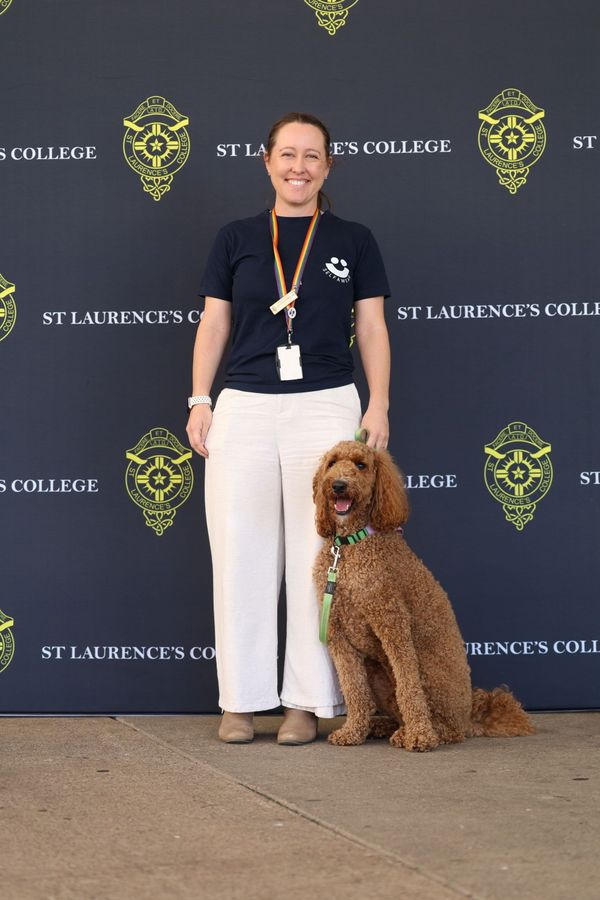
Our Counselling and Pastoral teams will provide additional support throughout the period, with perhaps the most popular member of the team requiring no appointment at all. Teddy, our therapy dog, will also be on hand; a reminder that sometimes the most effective circuit-breaker between examinations has four legs and very little interest in an ATAR.
There is another reason to keep examinations in perspective. External assessment is both a culmination and a point of departure. Our Careers Counsellors will continue helping students navigate university, training, employment and other post-school pathways.
Beyond the Examination
Perhaps that is why the College record from 1946 remains so compelling 80 years later. It records examination results, but the story does not end there. It follows those young men beyond Lauries: into medicine and engineering, teaching, banking, accountancy and business.
Those boys could not have known, as they prepared for their examinations, where their learning would eventually take them. Neither can the young men preparing for external assessment at Lauries today.
The examinations have changed. Our understanding of learning has advanced enormously. The pathways available to our students are broader than the boys of 1946 could have dreamed. Yet the aspiration feels remarkably familiar.
Our task is to prepare each young man exceptionally well for the examination before him…and for the life of possibility that lies beyond it.